
About Finalsite
Better tools. Stronger schools.
Finalsite is a software-as-a-service company that provides communications and content management solutions to educational institutions, particularly focused on K12 schools. In addition to their flagship content management system, Composer, Finalsite offers modules to help schools manage: calendars, forms, contacts, athletics, bulk email and text messaging, files, social media feeds, news and blogging, mobile apps, and more. While sites are designed and built internally with customized templates, and some content migration services may be included, clients are expected to use Finalsite’s tools independently after site launch.
Over the course of 7 years, and a period of explosive growth for the company, I worked to build scalable onboarding and product training opportunities for clients as well as Finalsite employees. From knowledge base articles and blog posts to recorded webinars and interactive video-based courses, I designed empowering learning experiences that helped multiple types of users make the most of their Finalsite tools.
Know your audience
Finalsite’s broad user base presented unique challenges for creating educational content to address their needs. A Finalsite user may be anyone from a teacher with no technical background building a form during her free period to a district IT administrator implementing sites for dozens of elementary, middle, and high schools. Finalsite’s granular user permissions allowed even parents and students to access Composer or any of its modules. Users’ needs varied widely depending on where they were in their journey, whether launching a new site, updating an existing one, or (often) taking over a site from a previous admin who didn’t leave adequate handover instructions. As a SaaS, Finalsite also released new features regularly (on a two-week agile cycle) that required additional training for even the most seasoned admins.
To ensure we were catering to our clients’ needs, whatever their background, I created three levels of user personas: User, Admin, and Superadmin. A User was someone who was creating content or using a module for its intended purpose, such as publishing a news article, sending a message, or building a form. They would almost never need to change the configuration settings for a module, which is where the Admin role comes in. Superadmin encompasses users still in the initial design (or redesign) phase and preparing for site launch, as well as district admins whose actions may impact multiple Composer instances. These roles are fluid, and a Superadmin may function as an Admin or even User the majority of the time.
Where educators come to learn
As Finalsite’s customer base grew, the need for dedicated trainers and training resources soon became apparent, and the Product Training team was born. I was tapped to continue expanding and improving the knowledge base on a full-time basis, as well as offering individual and group training sessions. We had a directive from the CEO to create a Finalsite Certification for power users, and so we began the search for a learning management system.
I worked extensively with the team lead to research and evaluate options, prepare reports and side-by-side comparisons, and participate in sales calls. I conducted thorough sandbox testing on leading contenders Docebo and Skilljar, but ultimately decided that Thought Industries best suited our needs. In addition to the certification exam functionality, we wanted to create courses without relying SCORM, and Thought Industries had the best selection of in-app authoring tools.
The CEO planned to announce Finalsite Certification at the company conference in March, so by the time we signed the contracts in December we had barely 3 months to complete the site launch. I managed that process within the constrained time frame, ensuring that we had not only an operational LMS and two levels of certification exams, but also a full complement of interactive product training courses.
Following the successful site launch, I continued my role as LMS administrator, which included user management and analytics reporting, troubleshooting and working with Thought Industries to resolve issues, managing certifications and awarding certificates, building out new pages and features, and uploading and updating site content.
Applying UX to ID
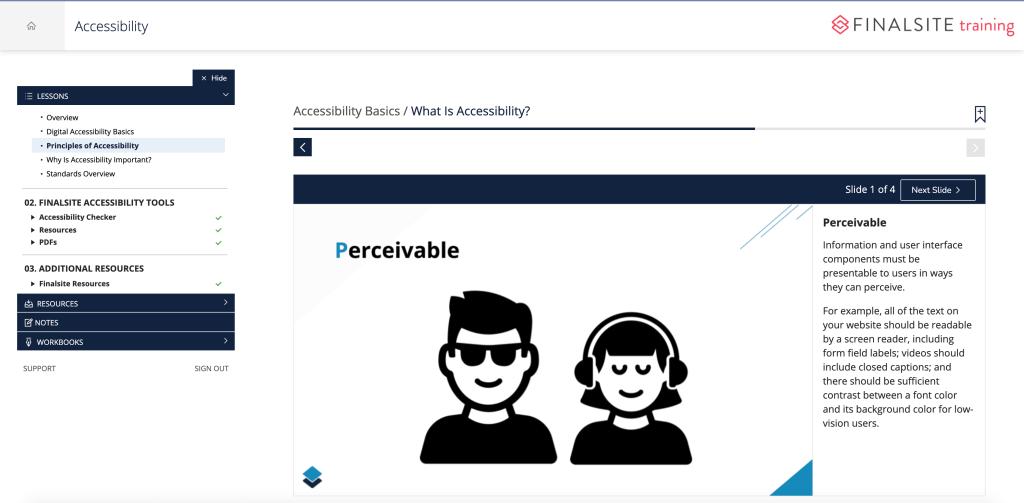
With some writing assistance from my colleagues, I outlined, wrote (or reviewed), and produced interactive courses covering Composer and all of its major modules. I used adult learning theories, UX principles, and hands-on experience working with clients and Finalsite products to create scalable elearning solutions that satisfied learners’ objectives and occasionally even delighted them.
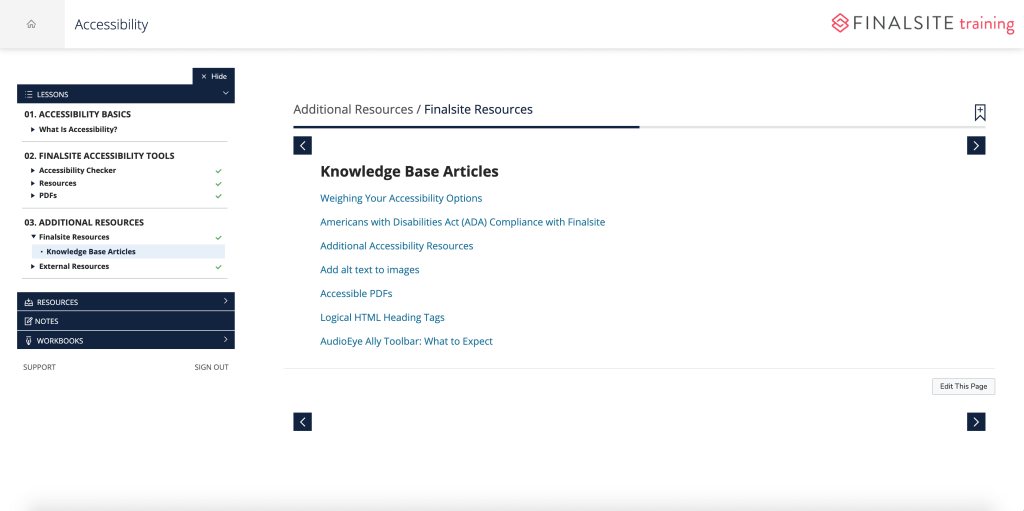
I inventoried and audited existing video content and repurposed it where possible, along with content from the knowledge base, and I began the course for each product with a needs analysis and objective-based outlines.
Throughout my research into androgogy and other adult learning philosophies, the common theme was easy to discern: Treat learners like adults. They’re not in school, and a passing grade is not the objective. With that in mind, I ensured that each course maintained a focus on helping users do their jobs, starting with a “What’s in it for me?” section in the course description, alongside learning goals.
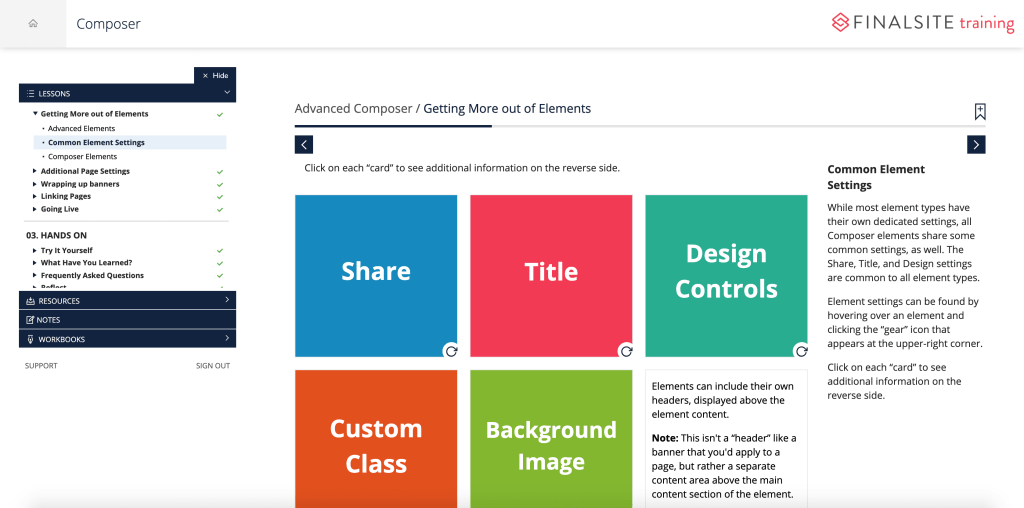
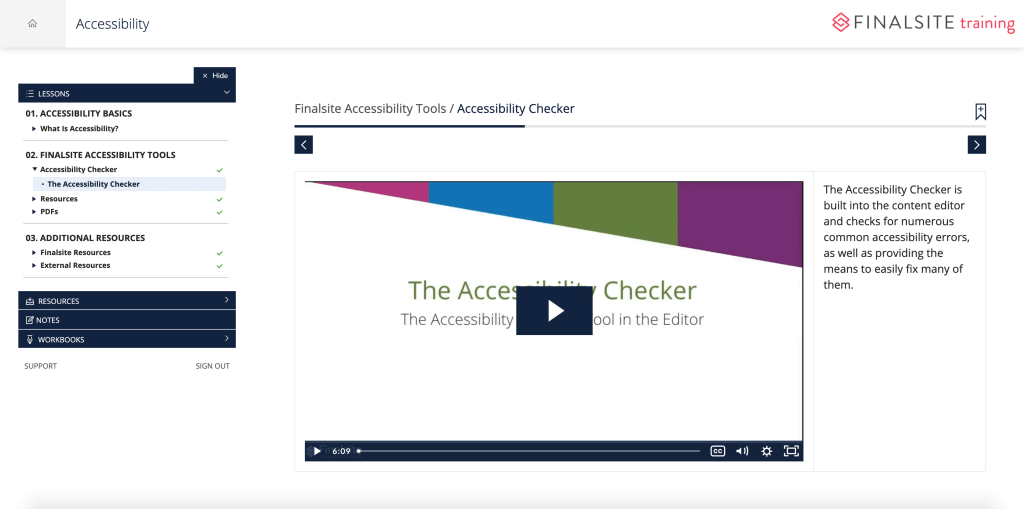
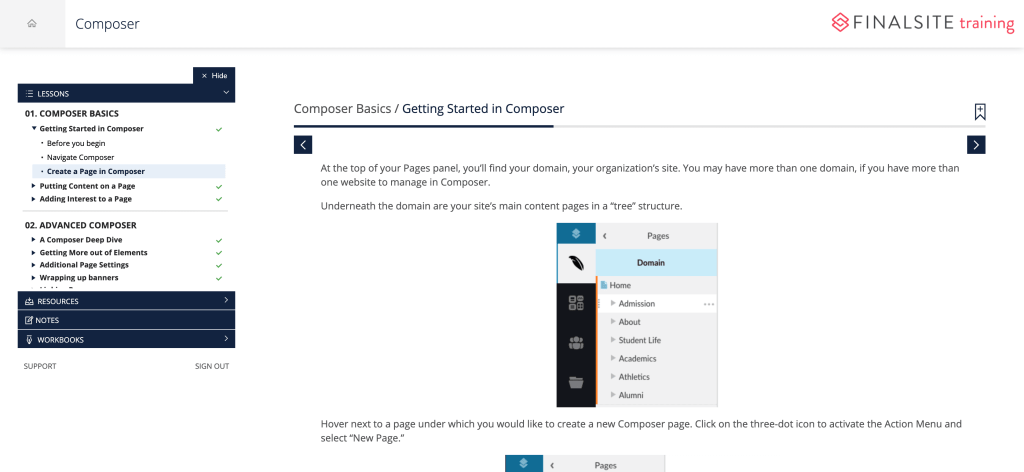
I made creative use of almost every page type available in the Thought Industries platform to create multi-modal, scaffolded learning experiences, but the centerpiece was the screencast videos. In some cases, I modified the existing training videos with branded title slides and outros, as well as background music for a more polished feel. For new videos, I wrote scripts and handed them off to a colleague with an audiobook-quality voice to record.
Upon receiving the recording files, I added the backing track and created screencast recordings using Camtasia (or Screencast-o-Matic in the early days). I took extreme care with the details, such as preparing the demo site with appropriate content and ensuring deliberate, smooth mouse movements and scrolling. I edited the screen recording and audio together seamlessly, adjusting the playback speed, cutting frames, or inserting pauses to make the actions on the screen align exactly with the narration describing them.
While Camtasia offers a wide variety of effects I experimented with, I used them sparingly to enhance understanding without creating a distraction. I used subtle fade transitions for shifting between screens and a more obvious flip to signal changing from the back end to the front end of the website. I kept a consistent, simple outline style with fades in and out timed precisely to disappear with a new screen loading. When the video was completed, I generated captions using the script and then edited them for timing and accuracy. Ultimately, I applied the same level of detail-oriented precision to creating these videos that I have relied upon since my days as a proofreader.
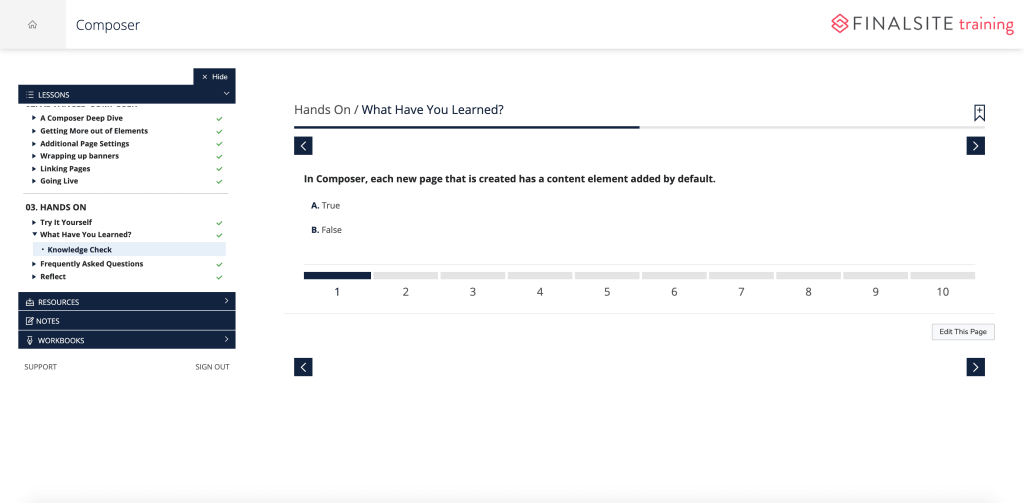
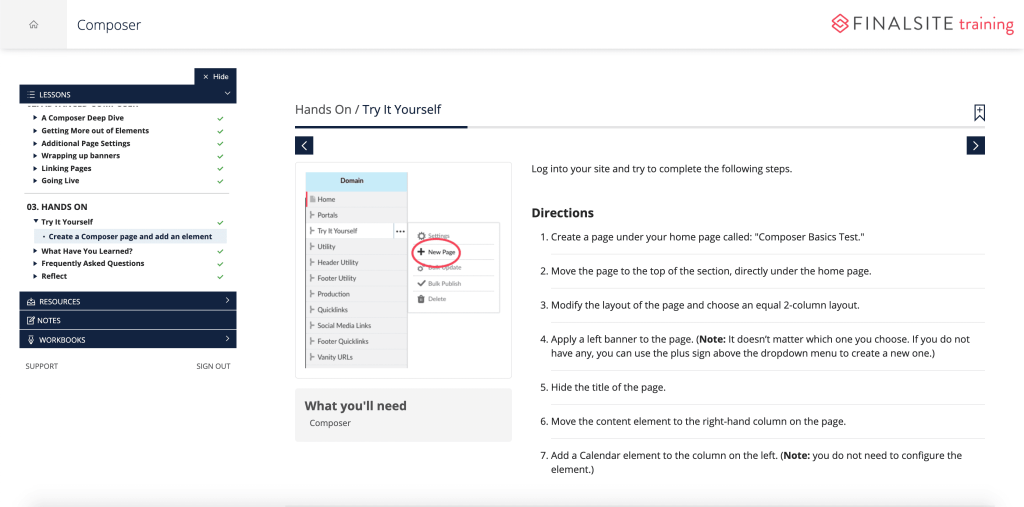
The end of each course included a “knowledge check” quiz and a “try it yourself” section with step-by-step instructions to complete a task on the user’s own site. There’s only so much a learner gets from watching other people click buttons, so a hands-on activity was important for them to integrate their knowledge.
 Lauren B. Lentini